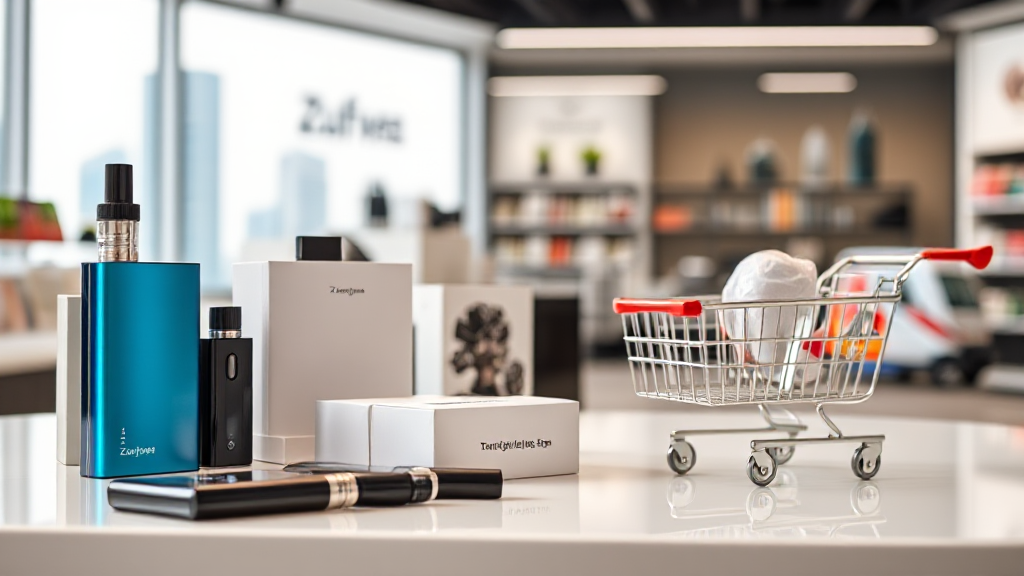
Auditing a Lana Ultra 2 Listing: What Checks Out and What Does Not
Most of what any online listing tells you about a disposable vape cannot be confirmed before the parcel is in your hands. That is not cynicism; it is simply the state of the market. Puff counts, battery claims, flavour accuracy, and authenticity markers are all written by the seller, and the buyer absorbs the risk. So when a product like the Lana Ultra 2 shows up on a storefront, the sensible move is to sort its claims into two piles: things a buyer can actually verify, and things that remain marketing until proven otherwise. This audit walks through that sorting process claim by claim, using the marbo 25k category of high-capacity disposables as the reference point, because the same questions apply across every listing in this segment.
Claims a buyer can verify before and after delivery
Start with the claims that leave a paper trail. A retailer’s identity, its stated delivery terms, and its payment options are checkable before you commit. If a store advertises cash on delivery, that is a verifiable promise: you either hand over money at the door or you do not. If it advertises discreet packaging, you can inspect the parcel when it arrives and judge for yourself. These are not puff-count claims; they are operational claims, and they are the ones worth weighing most heavily when you decide where to buy.
The device itself offers a second layer of verifiable detail once it is in your hands. You can check the packaging against the manufacturer’s own reference images, look for a batch or serial code, and compare the physical dimensions and weight against the specification. A listing for a marbo vape 25k should describe a device whose size matches its advertised capacity; a 25,000-puff unit that feels suspiciously light or small is a red flag you can detect without any lab equipment. None of this confirms the puff count itself, but it does confirm whether the product is what the listing says it is.
Then there is the flavour. This is the most subjective claim in any listing and the least auditable in advance. Descriptions like “iced mango” or “creamy tobacco” are marketing language, not specifications. The only honest verdict is that flavour accuracy cannot be verified until you vape it, and even then your perception is your own. Treat flavour copy as an invitation, not a promise.
Where puff counts and capacity claims break down
Now the harder pile. A puff count is a laboratory estimate, not a measurement of your experience. Manufacturers typically derive it from a fixed puff duration under controlled conditions, and almost nobody vapes that way. Short, sharp draws stretch the number; long, slow draws shrink it. A device rated at 25,000 puffs may deliver considerably fewer for a heavy user, and that is not necessarily deception, it is arithmetic applied to an average that does not describe you.
The same logic applies to battery capacity. A listing might state a milliamp-hour figure and a recharge specification, both of which are plausible and neither of which tells you how the cell behaves after two weeks of cycling. Capacity claims are directionally useful, not precise. If a seller presents them as exact guarantees, that is a signal about how the rest of the listing is written.
This is why comparing across a catalogue helps. When you look at a lana pix 20k alongside a larger-capacity device, the puff numbers give you a rough ranking, not a precise measurement. The ranking is often reliable; the specific figure rarely is. A cautious buyer uses the numbers to shortlist and then relies on other signals to decide.
Device reliability claims deserve the same scepticism. Statements about leak resistance, coil longevity, or consistent output are testable only over time, and by the time you have tested them, the purchase is long finished. The honest verdict on these claims is “unproven but plausible,” which is different from “false.” A listing is not lying simply because it cannot prove its performance claims in advance.
Authenticity signals and how to read them
Authenticity is the claim buyers care about most and the one most often asserted without evidence. A listing that says “100% authentic” has told you nothing you can act on. What you can act on is whether the seller provides verifiable business details, whether the product arrives in intact retail packaging, whether the batch coding is legible, and whether the seller’s own product pages are internally consistent. A store that lists a lana ultra 2 with clear specifications, consistent naming, and a coherent catalogue is more credible than one that makes louder claims with less detail.
Consistency across a range is a genuinely useful signal. If a retailer stocks multiple devices in the same family, such as a lana pix and its higher-capacity sibling, the way those pages are written tells you how carefully the seller works. Sloppy listings with mismatched images and contradictory specs are a warning. Careful listings are not proof of authenticity, but they are evidence of a seller who pays attention.
It also helps to know what you are comparing against. A snowwolf 16k and a 25,000-puff device occupy different positions in the market, and a seller who can explain those differences clearly is more likely to be describing real products than a seller who uses identical copy for everything. Specificity is the cheapest form of credibility, and it is one of the few authenticity signals available before delivery.
For buyers in Singapore, delivery terms carry extra weight because they are enforceable in practice. A store offering terea singapore customers the option to pay on delivery shifts some of the risk back to the seller. That does not validate a puff count, but it does mean you are not sending money into the void. It is a verifiable claim, and verifiable claims should always outrank unverifiable ones when you are deciding.
One more device worth noting in this audit is the lana pen plus 9k, a smaller-capacity option that sits at the opposite end of the range from the 25k devices. Its presence in a catalogue is useful precisely because it is modest in its claims. A seller who stocks both high-capacity and low-capacity devices, and describes each honestly, is less likely to be inflating numbers across the board.
The verdict: what a listing can and cannot prove
After sorting the claims, the picture is clear enough. A listing can prove that a seller exists, that it offers certain payment and delivery terms, that it stocks a coherent range, and that its product descriptions are internally consistent. After delivery, it can prove that the physical device matches its stated form factor and that the packaging is intact. These are real, checkable facts, and they are the foundation of any sensible purchase decision.
A listing cannot prove a puff count, a battery’s real-world endurance, a flavour’s accuracy, or authenticity in the abstract. Those claims remain unverified until long after the transaction, and in some cases they can never be fully verified by a consumer at all. The correct response is not to dismiss them, but to weight them appropriately: treat them as reasons to shortlist, never as reasons to trust.
The practical takeaway for anyone shopping this category is to lead with the verifiable. Choose sellers whose operational claims you can test, whose catalogues are specific rather than generic, and whose payment terms reduce your exposure. Then treat every performance number as an estimate and every flavour description as a suggestion. A cautious buyer is not a suspicious one; they simply know which claims carry weight and which ones are just words on a page.
Leave a Reply